English language
Published 2012
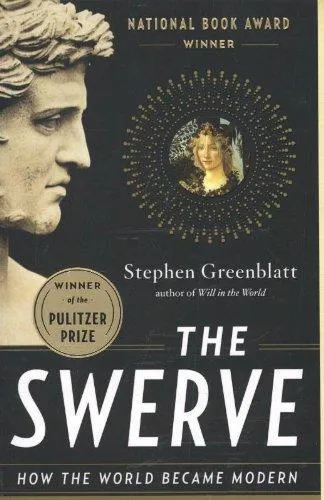
The Swerve: How the World Became Modern is a 2011 book by Stephen Greenblatt and winner of the 2012 Pulitzer Prize for General Nonfiction and 2011 National Book Award for Nonfiction. Greenblatt tells the story of how Poggio Bracciolini, a 15th-century papal emissary and obsessive book hunter, saved the last copy of the Roman poet Lucretius's De rerum natura (On the Nature of Things) from near-terminal neglect in a German monastery, thus reintroducing important ideas that sparked the modern age. The title and the subtitle of the book are explained in the author's preface. "The Swerve" refers to a key conception in Epicurean atomism which holds that atoms moving through the void are subject to clinamen: while falling straight through the void, they are sometimes subject to a slight, unpredictable swerve. Greenblatt uses it to describe the history of Lucretius' own book: "The reappearance of his poem was such a …
The Swerve: How the World Became Modern is a 2011 book by Stephen Greenblatt and winner of the 2012 Pulitzer Prize for General Nonfiction and 2011 National Book Award for Nonfiction. Greenblatt tells the story of how Poggio Bracciolini, a 15th-century papal emissary and obsessive book hunter, saved the last copy of the Roman poet Lucretius's De rerum natura (On the Nature of Things) from near-terminal neglect in a German monastery, thus reintroducing important ideas that sparked the modern age. The title and the subtitle of the book are explained in the author's preface. "The Swerve" refers to a key conception in Epicurean atomism which holds that atoms moving through the void are subject to clinamen: while falling straight through the void, they are sometimes subject to a slight, unpredictable swerve. Greenblatt uses it to describe the history of Lucretius' own book: "The reappearance of his poem was such a swerve, an unforeseen deviation from the direct trajectory—in this case, toward oblivion—on which that poem and its philosophy seemed to be traveling." The recovery of the ancient text is seen as its rebirth, i.e. a "renaissance". Greenblatt's claim is that it was a 'key moment' in a larger "story ... of how the world swerved in a new direction".